
Deck
Definition
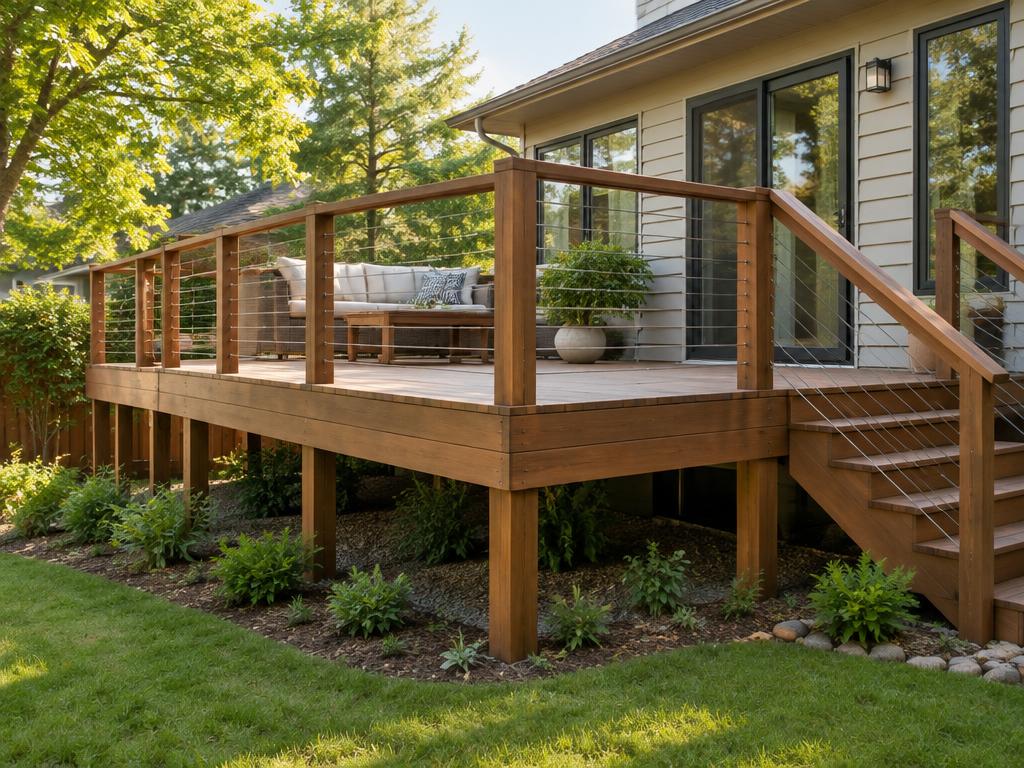
A deck is a flat, load-bearing architectural platform typically constructed outdoors and elevated from the ground. Usually made of wood, composite materials, or metal, it serves as an extension of a building's living space for activities such as lounging, dining, or entertaining. Decks are often connected to a main structure but can also be free-standing, and they typically include safety features like railings and stairways for access. Supported by a structural framework of posts, beams, and joists, decks are engineered to withstand environmental exposure while providing a functional transition between indoor and outdoor environments.
Structural & construction notes
Common types of decks include attached decks that connect directly to the house, detached or floating decks that stand independently, and multi-level decks designed for sloped terrains. Other varieties include wraparound decks that encircle the building, rooftop decks for elevated outdoor space, and functional designs like pool, covered, or enclosed decks. Common materials include pressure-treated wood, cedar, redwood, composite, and aluminum. Pressure-treated wood is the most affordable ($2-$6 per square foot) but requires high maintenance and has a shorter lifespan (10-15 years). Mid-range options like cedar and redwood offer natural beauty and moderate durability but still need regular care. Composite materials and aluminum have the highest upfront costs ($5-$22 per square foot) but offer superior durability, 25-50+ year lifespans, and minimal maintenance, providing better long-term value.
Frequently Asked Questions
An educational reference. Project-specific design requires professional guidance.