
Anchor bolt
Definition
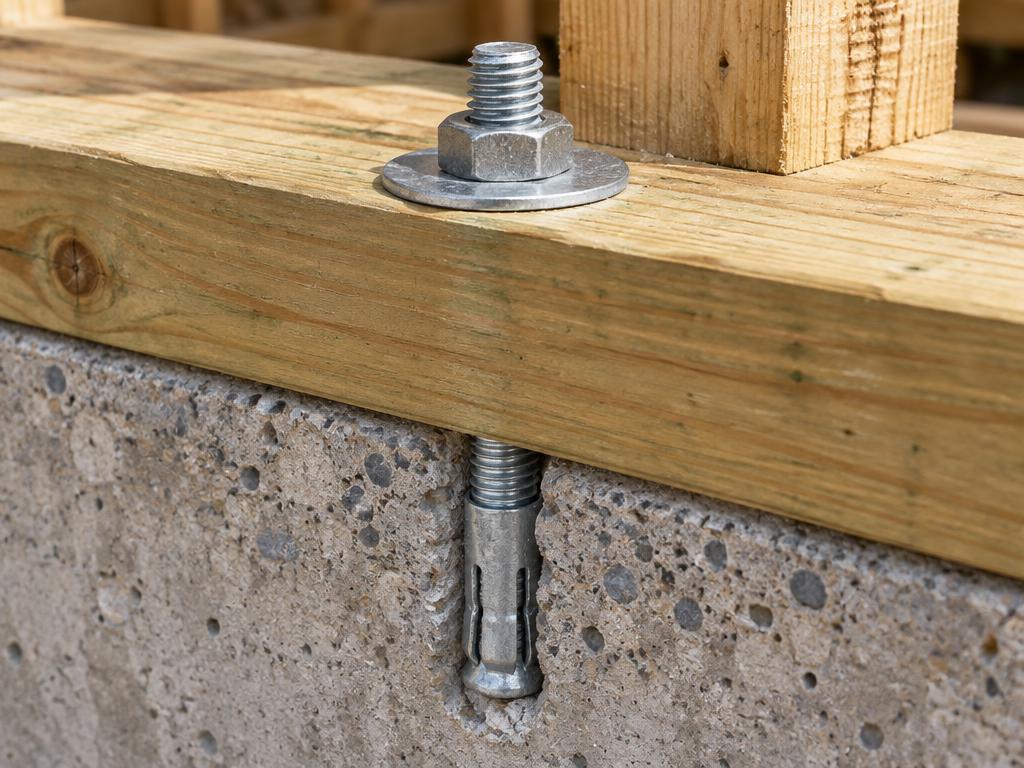
An anchor bolt is a robust structural fastener used to securely connect structural and non-structural elements to concrete or masonry foundations. Functioning as a critical link in the building envelope, these bolts are either cast into wet concrete during the initial pour or retrofitted into hardened surfaces to transfer tensile, shear, and compressive loads from the structure into the stable base. They are essential for ensuring the stability and safety of various constructions, ranging from securing steel columns and heavy machinery to mounting light poles and bridge railings, particularly in environments prone to high winds or seismic activity. Available in diverse designs such as L-shaped, headed, or expansion types, anchor bolts are typically made from carbon, stainless, or galvanized steel to provide long-term durability and resistance to movement or displacement.
Structural & construction notes
Common types of anchor bolts include cast-in-place anchors, such as L-shaped and J-shaped bent bars or headed bolts, and post-installed anchors, which are installed into hardened concrete. Post-installed varieties include mechanical expansion anchors like wedge and sleeve anchors, as well as undercut, screw, and chemical or adhesive anchors that use resin for bonding. Other specialized types include drop-in anchors for flush finishes, strike anchors for lightweight fixtures, and heavy-duty toggle bolts for hollow materials. Common materials include carbon steel, stainless steel, aluminum, and titanium. Carbon steel is affordable but requires coatings like galvanizing for durability, while stainless steel and titanium offer superior corrosion resistance and longevity at a significantly higher initial cost. High-strength grades, such as 8.8, increase upfront expenses but enhance structural durability and reduce the long-term risk of costly structural failures.
Frequently Asked Questions
An educational reference. Project-specific design requires professional guidance.