
Base course
Definition
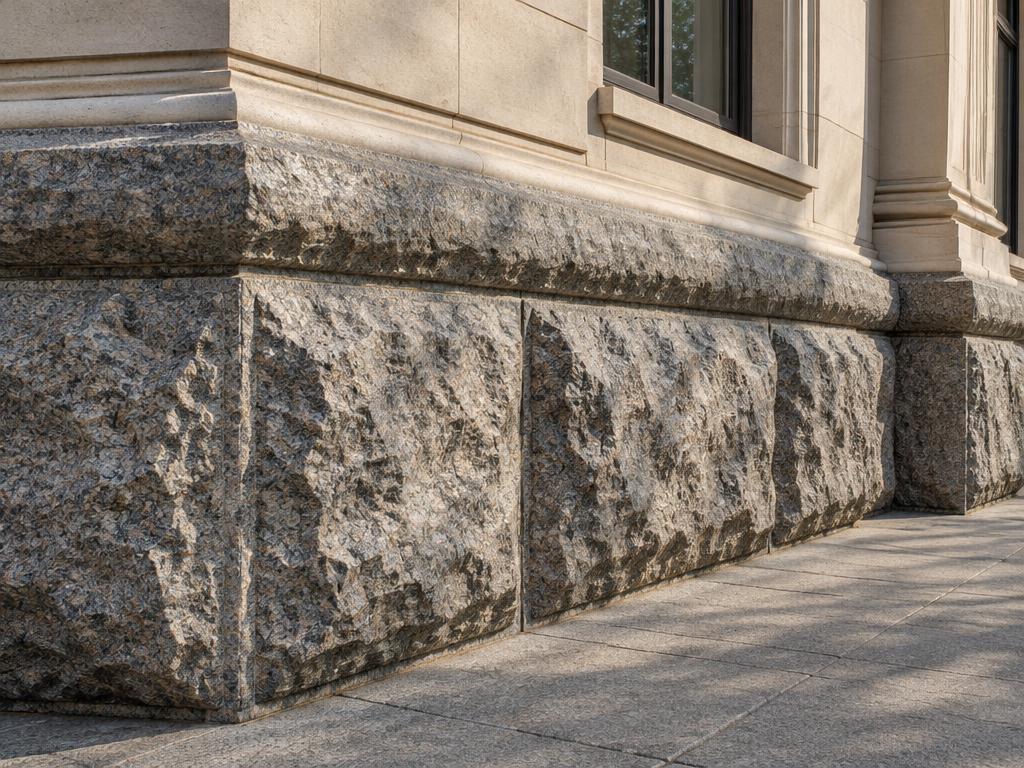
A base course is the lowest horizontal row of masonry, such as stone, brick, or concrete blocks, located at the foundation level of a building's exterior wall. It serves both functional and aesthetic purposes by providing a sturdy, level starting point for the rest of the wall construction and often acting as a visual transition between the ground and the upper structure. Depending on the design, the base course may be thickened or reinforced to help distribute the structural load and protect the building from ground-level moisture and physical wear.
Structural & construction notes
Common types of base courses include granular bases made of crushed stone or gravel, stabilized bases treated with cement or asphalt, and hydraulically bound bases. Other variations include macadam bases, lean concrete bases, and open-graded or dense-graded drainage layers designed for specific load-bearing and moisture requirements. Common materials for a base course include crushed stone (limestone, granite, basalt), gravel, and recycled concrete aggregate. High-durability materials like crushed stone offer excellent load-bearing capacity and long-term stability but have higher initial costs, ranging from $25 to $40 per ton. Budget-friendly options like recycled concrete ($10–$20 per ton) or gravel ($15–$25 per ton) reduce upfront investment but may require more frequent maintenance or provide less support for high-traffic areas.
Frequently Asked Questions
An educational reference. Project-specific design requires professional guidance.