
Courtyard
Definition
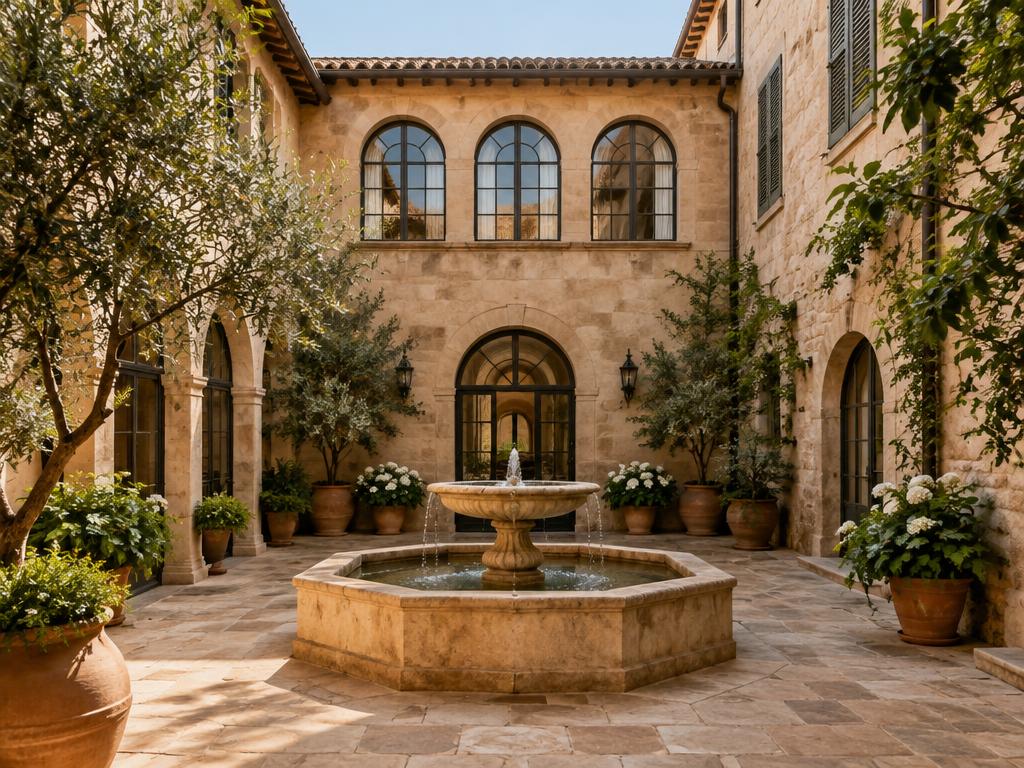
A courtyard is an open-air architectural space that is enclosed by walls or buildings, often serving as a central organizing feature within a residential, commercial, or institutional structure. Throughout history, courtyards have provided essential benefits such as natural light, ventilation, and privacy, acting as a protected outdoor extension of the interior living area. They function as multifunctional spaces for social gathering, relaxation, and gardening, while also helping to regulate the building's microclimate by facilitating airflow and cooling in temperate regions.
Structural & construction notes
Common types of courtyards include traditional domestic variations like the Roman atrium, the Chinese siheyuan, and the medieval European farmhouse quadrangle. Functional types include light courts for air and illumination, cloisters or garathes in religious and academic settings, and contemporary versions like central patios, apartment courtyards, and sunken gardens. Additionally, they can be categorized by their relationship to the street, such as enclosed urban courts or open-fronted suburban designs. Common materials for courtyards include natural stone (granite, bluestone), concrete pavers, brick, and gravel. High-end materials like natural stone and brick offer exceptional durability, often lasting 50 to 100 years, but come with significantly higher upfront costs and labor requirements. Concrete pavers provide a mid-range balance of moderate cost and good durability (20-50 years), while gravel is the most affordable and easiest to install but requires regular topping up and offers the shortest lifespan.
Frequently Asked Questions
An educational reference. Project-specific design requires professional guidance.