
Non-load-bearing wall
Definition
A non-load-bearing wall, also known as a partition wall, is a structural element designed to divide interior spaces and provide privacy without supporting any vertical loads other than its own weight. Unlike load-bearing walls, which transfer the weight of the roof and upper floors to the foundation, non-load-bearing walls can typically be removed or relocated during renovations without compromising the building's structural integrity. These walls are often constructed from lightweight materials such as drywall, glass, or timber and are frequently used in modern steel-frame or concrete-frame buildings as an adaptable "skin" or interior divider to define rooms, hallways, and functional zones. In addition to organizing space, they can serve as barriers for fire protection and sound attenuation, and they often house essential utilities like electrical wiring and plumbing.
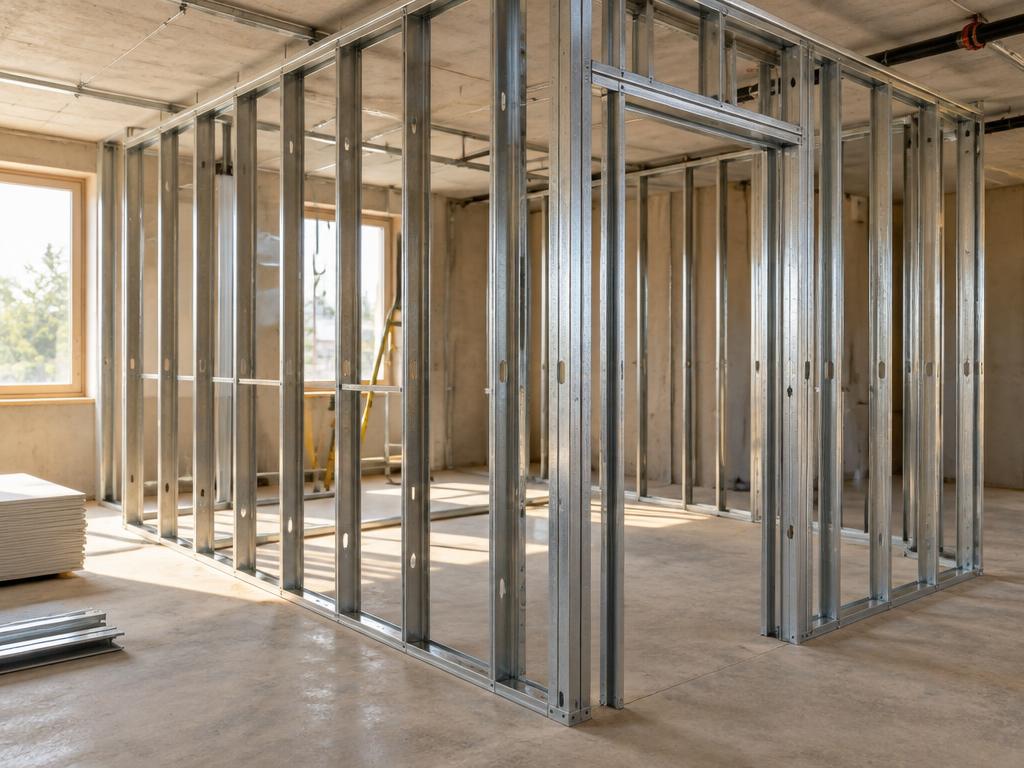
Structural & construction notes
Common types of non-load-bearing walls include partition walls used to divide interior spaces, curtain walls which serve as exterior skins, and infill walls within a structural frame. They are also categorized by their materials and construction, such as hollow concrete block, facade brick, hollow brick, drywall, glass, and lightweight metal framing. Additionally, specialized versions include movable partitions for flexible layouts, shaft walls for vertical service runs, and decorative features like niches or feature walls. Common materials for non-load-bearing walls include drywall, glass, wood, lightweight concrete blocks, and fiber cement. Drywall and wood framing are among the most cost-effective upfront options but are more susceptible to moisture and physical damage, leading to higher long-term maintenance costs. Masonry materials like concrete blocks and brick offer superior durability, fire resistance, and lower maintenance but require a higher initial investment in both materials and labor. High-performance alternatives like magnesium oxide (MgO) or cement boards are more expensive than drywall but provide enhanced longevity in high-moisture or high-traffic areas.
Frequently Asked Questions
An educational reference. Project-specific design requires professional guidance.