
Partition wall
Definition
A partition wall is a non-load-bearing interior wall designed to divide a larger space into separate rooms or functional zones without supporting the building's structural weight. Constructed from diverse materials such as gypsum board, glass, wood, metal, or masonry, these walls offer flexibility in floor plan organization and can be either permanent or temporary. Beyond spatial division, partition walls are essential for providing privacy, acoustic insulation, and fire separation, making them a fundamental element in optimizing the functionality and aesthetic appeal of both residential and commercial interiors.
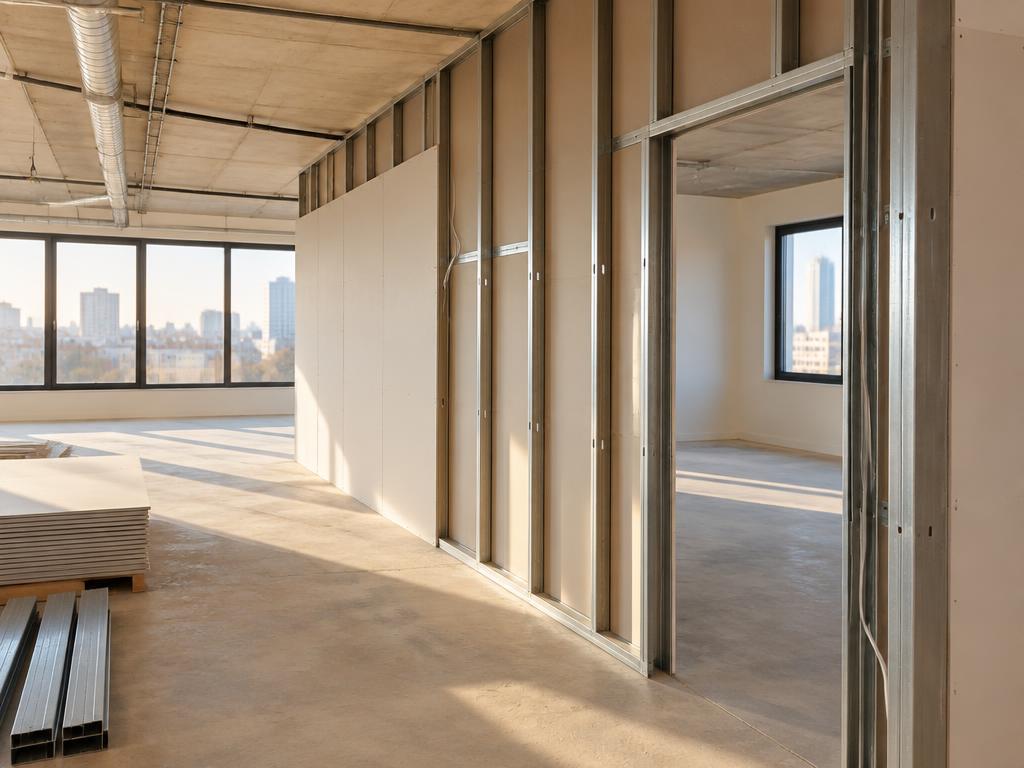
Structural & construction notes
Common types of partition walls include brick, glass, concrete, wooden, and metal stud partitions, which are categorized as either load-bearing or non-load-bearing. Other specialized varieties include gypsum board, plywood, asbesto cement, wood wool, and movable systems such as sliding, folding, or accordion-style dividers. Common materials include drywall, glass, brick, wood, and concrete. Drywall is the most cost-effective but least durable option, while materials like glass, stone, and brick offer superior durability and soundproofing at a significantly higher price point. Wood and modular systems provide a balance of aesthetic appeal and flexibility with mid-to-high range costs.
Frequently Asked Questions
An educational reference. Project-specific design requires professional guidance.