
Niche
Definition
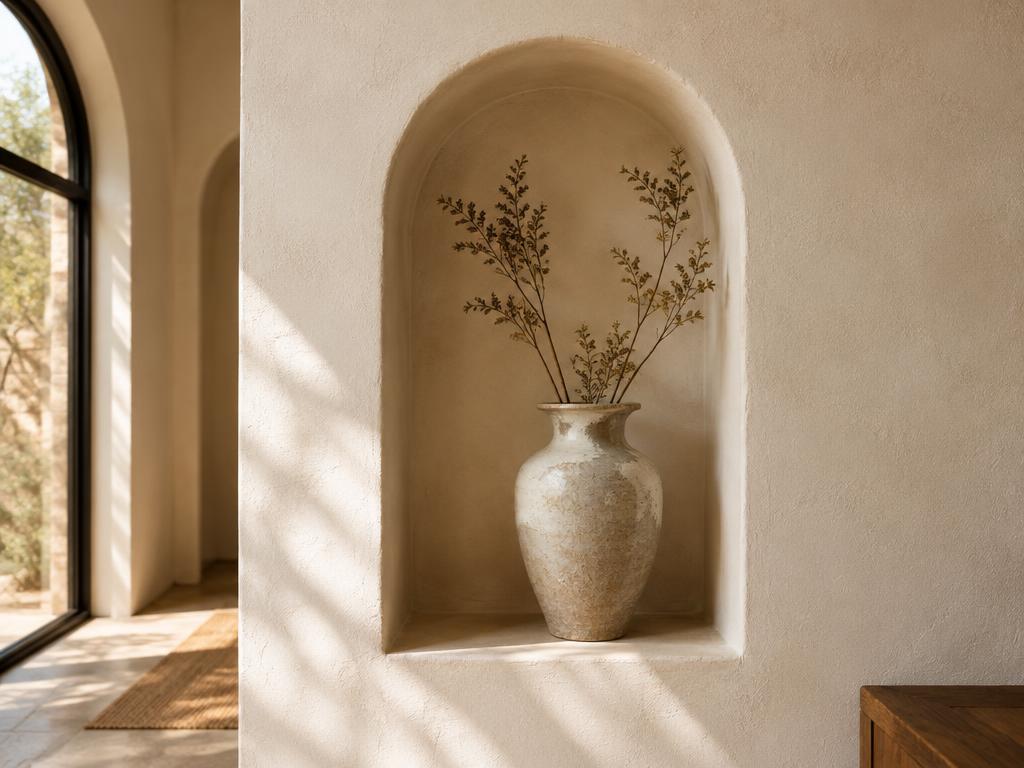
A niche is a specialized, recessed space or cavity integrated into the thickness of a wall or pier, designed to house decorative or functional objects such as statues, urns, or vases. Originating in classical architecture and extensively used in both interior and exterior surfaces, it serves to create visual interest and spatial depth by breaking up flat wall planes. These features often incorporate ornamental elements like arches, half-domes, or shell-like fluting at the apex to highlight the objects displayed within and communicate the building's architectural style.
Structural & construction notes
Common types of niches include rectangular, arched, semicircular, and segmented shapes, which can feature smooth or profiled inner surfaces. They are also categorized by their architectural style, such as classical shell-headed designs, Gothic tabernacle frames, or modern minimalist boxes. Specialized variations include blind niches, which are shallow recesses without statues, and mihrabs, which indicate the direction of prayer in Islamic architecture. Common materials include natural stone (granite or marble), ceramic or porcelain tile, stainless steel, and waterproof foams like EPS or XPS. High-durability materials like granite and stainless steel have higher initial costs but offer superior longevity and lower maintenance, while budget-friendly foam cores or vinyl reduce upfront investment but may require additional waterproofing treatments and more frequent long-term care.
Frequently Asked Questions
An educational reference. Project-specific design requires professional guidance.