
Drip edge
Definition
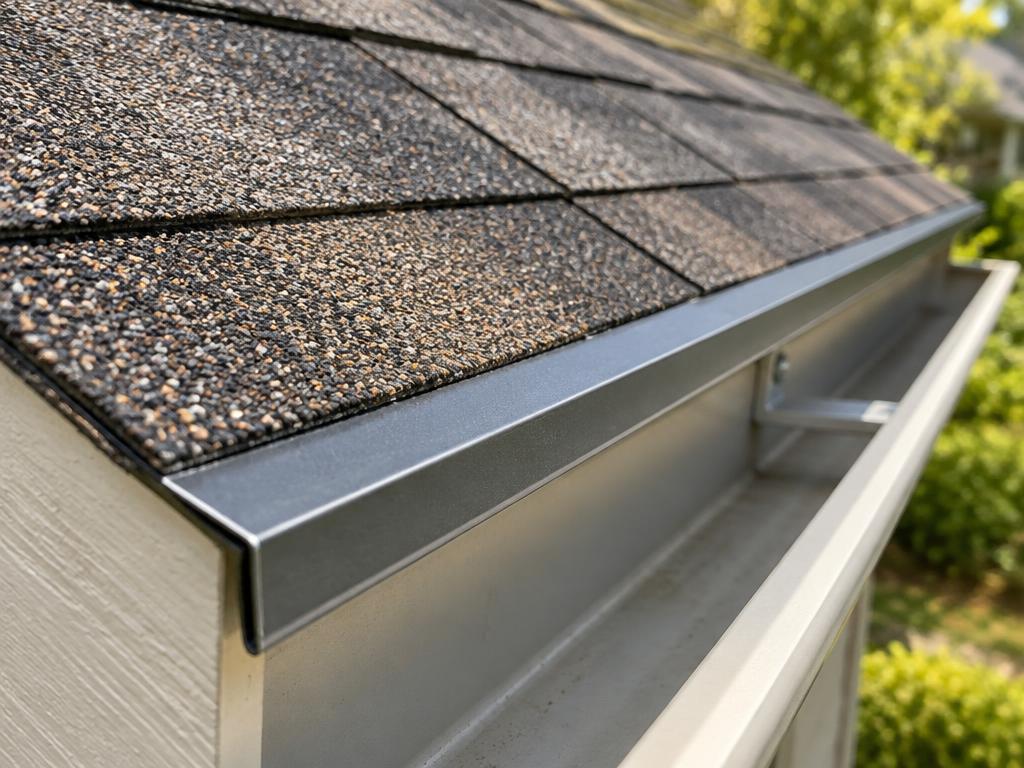
A drip edge is a specialized metal flashing, typically made of aluminum, galvanized steel, or copper, installed along the eaves and rakes of a roof to manage water runoff. Its primary function is to direct rainwater away from the fascia and roof deck and into the gutters, preventing water from seeping under the roofing materials where it could cause rot, mold, or structural damage. By creating a physical barrier and a clear path for drainage, the drip edge also protects against wind-driven rain and helps seal gaps to keep pests out of the attic, ultimately extending the lifespan of the entire roofing system.
Structural & construction notes
Common types of drip edges include Type C (L-style) for simple 90-degree protection, Type D (T-style) for enhanced water diversion, and Type F (gutter apron) which features an extended leading edge for retrofitting or rake edges. Other variations include specialty profiles like gravel stops for flat roofs, chimney caps, and coping for parapet walls, and materials range from common aluminum and galvanized steel to premium copper and lightweight vinyl. Common materials include aluminum, galvanized steel, copper, and vinyl. Aluminum and galvanized steel are cost-effective and durable options, costing around $0.50 to $1.25 per linear foot, with steel offering better wind resistance and aluminum providing superior rust resistance. Copper is a premium choice that is significantly more expensive ($3.50 to $9.50 per linear foot) but offers exceptional longevity and a unique aesthetic. Vinyl is the most affordable but tends to be less durable, often used more for doors and windows than roofing.
Frequently Asked Questions
An educational reference. Project-specific design requires professional guidance.