
Roof deck
Definition
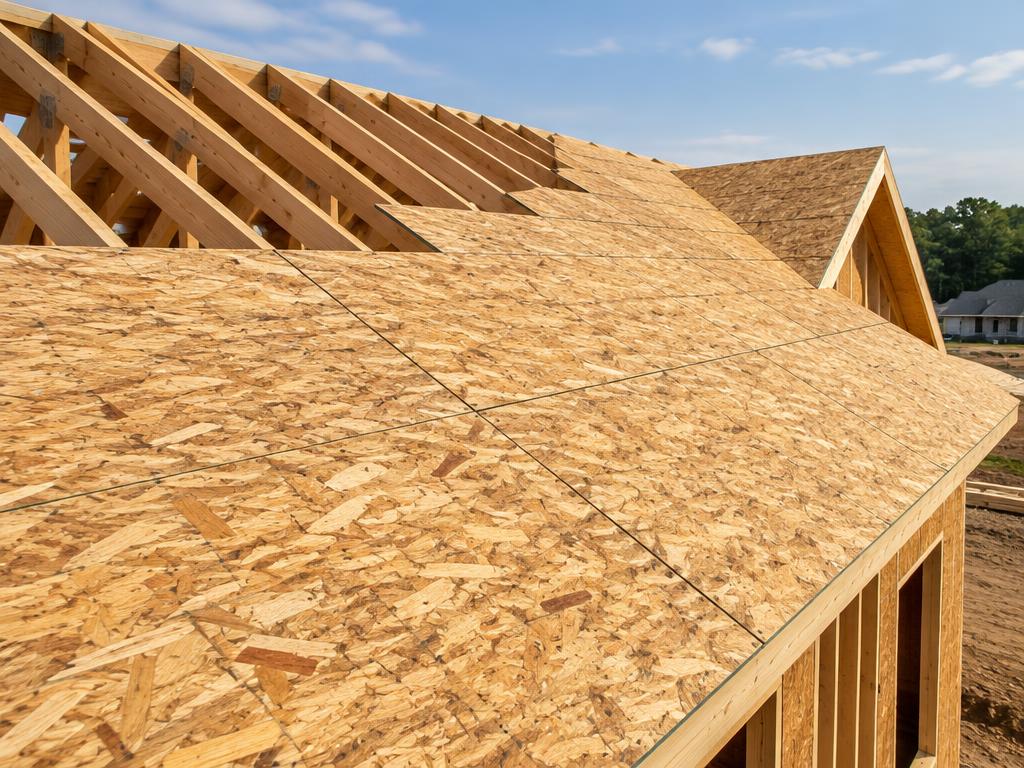
A roof deck, also known as roof sheathing, is a fundamental structural layer of wooden boards or metal panels installed over a building's rafters or trusses to provide a flat, stable surface for the entire roofing system. It acts as the critical foundation that supports the weight of shingles, tiles, and environmental loads like snow, while also serving as a secondary moisture barrier and a base for insulation. In urban contexts, the term also refers to a flat, finished rooftop area designed as a functional outdoor living space for relaxation or entertainment.
Structural & construction notes
Common types of roof decking include residential options like oriented strand board (OSB), plywood, and traditional plank decking, as well as commercial and industrial systems such as corrugated steel, structural concrete, and lightweight insulating concrete. Metal roof decks are further categorized by rib profile into Type B (wide rib), Type F (intermediate rib), Type A (narrow rib), and Type N (deep rib). Additional specialized variations include poured or precast gypsum, composite deck materials, and rooftop patio options like stone or concrete pavers and porcelain tiles. Common materials for roof decking include plywood, oriented strand board (OSB), and tongue and groove planks. OSB is the most economical choice ($2-$5 per square foot) but is more susceptible to water damage, while plywood ($3-$7 per square foot) offers better moisture resistance and long-term durability at a slightly higher price point. Premium options like tongue and groove or treated wood provide superior strength and rot resistance ($5-$10 per square foot) but come with significantly higher upfront material and labor costs.
Frequently Asked Questions
An educational reference. Project-specific design requires professional guidance.