
Underlayment
Definition
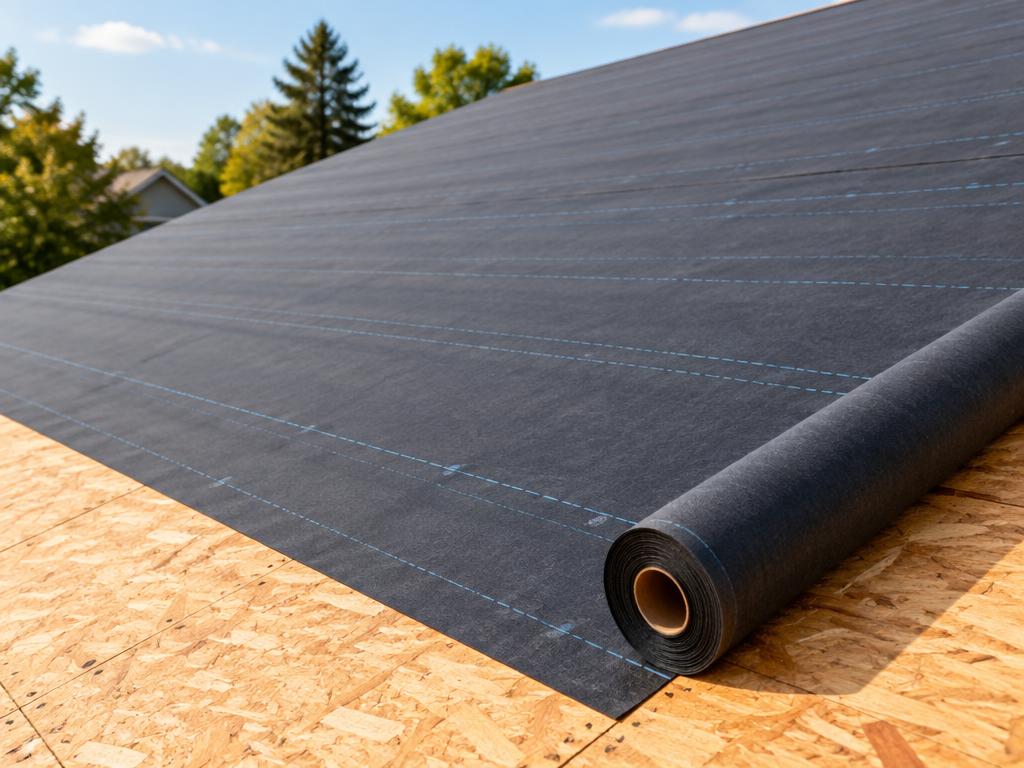
Roofing underlayment is a water-resistant or waterproof barrier material installed directly onto the roof deck, positioned between the structural sheathing and the visible exterior roofing material like shingles or metal. It serves as a critical secondary line of defense against moisture intrusion, safeguarding the building's wooden structure from rot and mold if the primary roofing layer is compromised by high winds, ice dams, or driving rain. Common types include traditional asphalt-saturated felt, durable and tear-resistant synthetic membranes, and self-adhering rubberized asphalt used for waterproofing vulnerable areas like eaves and valleys. In addition to moisture protection, underlayment provides temporary weather shielding during construction, contributes to fire ratings, and creates a smooth, uniform surface for the proper installation of the final roof covering.
Structural & construction notes
Common types of roof underlayment include asphalt-saturated felt, which is a traditional and budget-friendly option, synthetic underlayment made from durable polymers that offer superior tear resistance, and rubberized asphalt or self-adhered membranes that provide a premium waterproof seal. Other classifications include high-resistance non-breathable underlays and low-resistance breathable membranes that allow water vapor to escape. Common materials include asphalt-saturated felt, synthetic polymers (polypropylene or polyethylene), and rubberized asphalt. Felt is the most affordable but least durable, with a lifespan of 12-20 years and lower resistance to tearing and UV exposure. Synthetic underlayment is a mid-range option that offers significantly higher durability, better water resistance, and a longer lifespan of 20-50 years. Rubberized asphalt is the most expensive, premium choice, providing superior waterproofing and a self-adhering seal that offers the highest long-term ROI and durability in harsh climates.
Frequently Asked Questions
An educational reference. Project-specific design requires professional guidance.