
Gutter
Definition
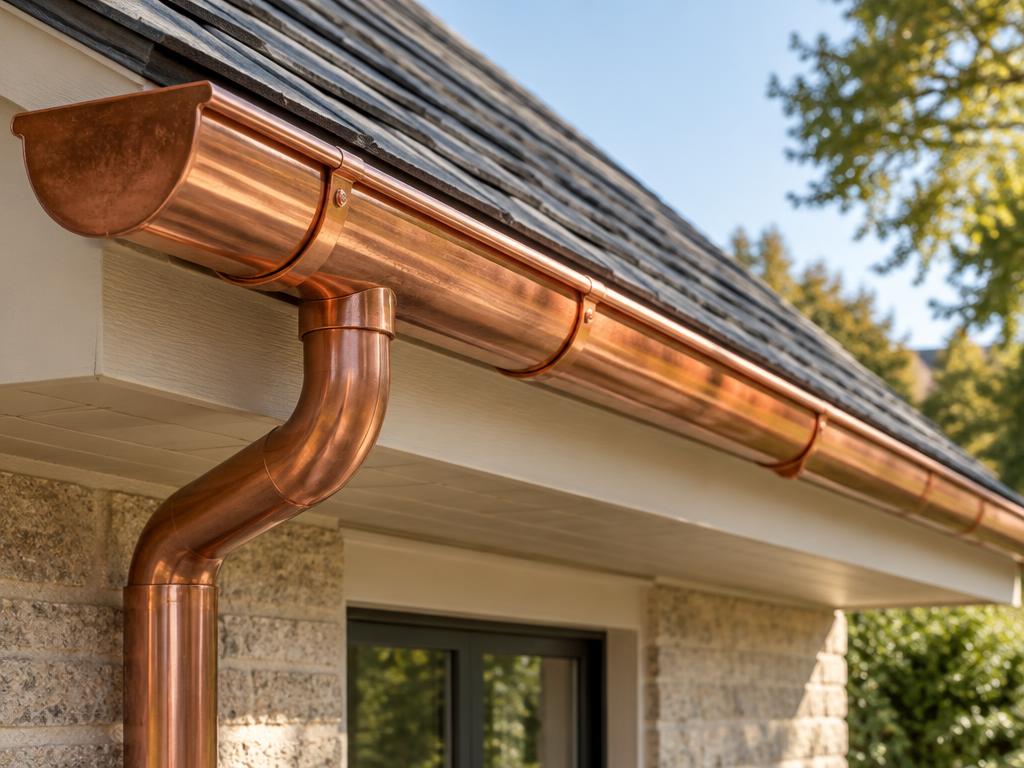
A gutter is a horizontal architectural element integrated into a building's roofing system to collect and redirect rainwater away from the structure. Typically shaped as a narrow trough attached to the roof's edge or built into the roof itself, it prevents water damage to walls, foundations, and landscaping by channeling runoff toward downspouts. Gutters are classified by their profile, such as K-style or half-round, and are commonly constructed from materials like aluminum, copper, vinyl, or steel to provide both functional water management and aesthetic coordination with the building's exterior.
Structural & construction notes
Common gutter types include K-style, half-round, box, fascia, and European gutters, which vary by their architectural shape and profile. They are also categorized by construction methods such as seamless or sectional systems, and by materials like aluminum, vinyl, copper, steel, and zinc. Specialized variations like integrated or built-in gutters are hidden within the roofline, while rain chains offer an aesthetic alternative to traditional downspouts. Common materials include vinyl, aluminum, steel, copper, and zinc. Budget-friendly options like vinyl and aluminum have lower upfront costs but shorter lifespans (10–25 years) and may require more maintenance or replacement. Premium materials like copper and zinc involve significant initial investments but offer exceptional durability (50+ years) and minimal long-term maintenance, providing better overall value for long-term homeowners.
Frequently Asked Questions
An educational reference. Project-specific design requires professional guidance.