
Ridge vent
Definition
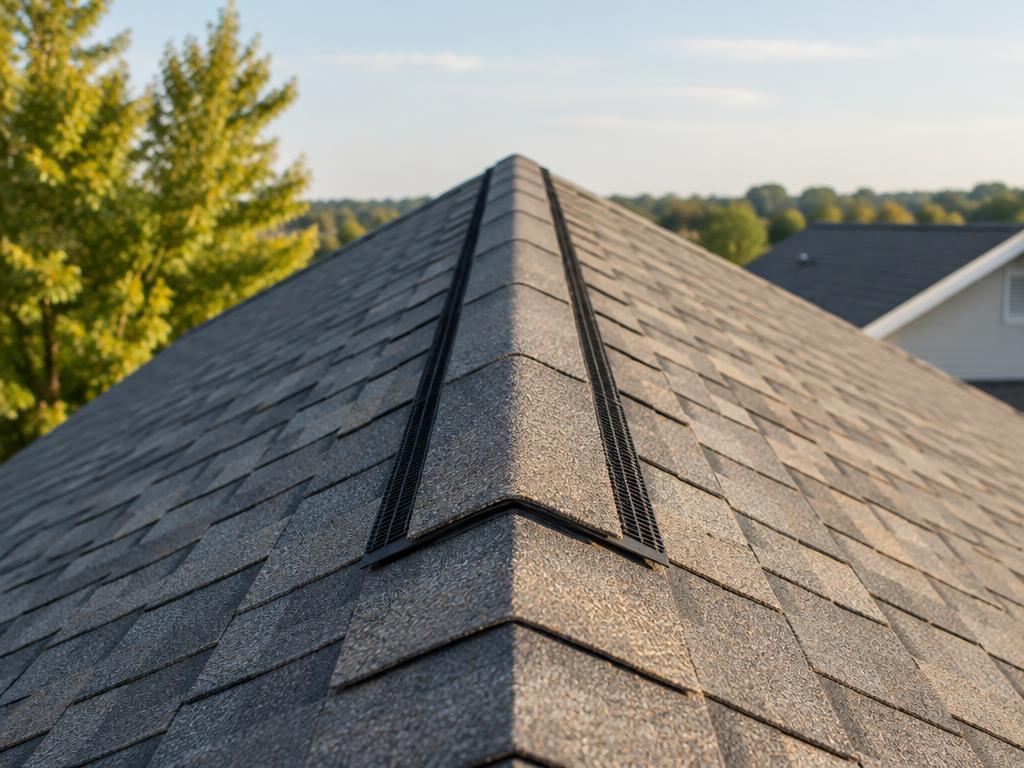
A ridge vent is a low-profile exhaust vent installed along the peak of a sloped roof to provide continuous attic ventilation. It works through natural convection, allowing warm, moist air to rise and escape from the highest point of the roof while drawing cooler air in through intake vents, such as soffit or eave vents. By promoting balanced airflow, ridge vents help regulate attic temperatures, reduce moisture buildup that can lead to mold or wood rot, and prevent the formation of ice dams in winter, ultimately extending the lifespan of the roofing system and improving energy efficiency.
Structural & construction notes
Common types of ridge vents include metal, hard plastic shingle-over, and soft foam shingle-over systems, which can be further categorized as baffled or non-baffled designs. Other variations include filtered or unfiltered models and those available in rigid sections or flexible rolls. Common materials for ridge vents include plastic (polypropylene or PVC), aluminum, and composites. Plastic vents are cost-effective and durable, while aluminum is lightweight and rust-resistant, falling into a mid-range price point. Steel is a premium, high-durability option but comes with higher upfront costs. High-quality materials generally offer better long-term performance and lower maintenance, whereas more affordable options like plastic rolls may have shorter lifespans or higher susceptibility to wind damage.
Frequently Asked Questions
An educational reference. Project-specific design requires professional guidance.