
Threshold
Definition
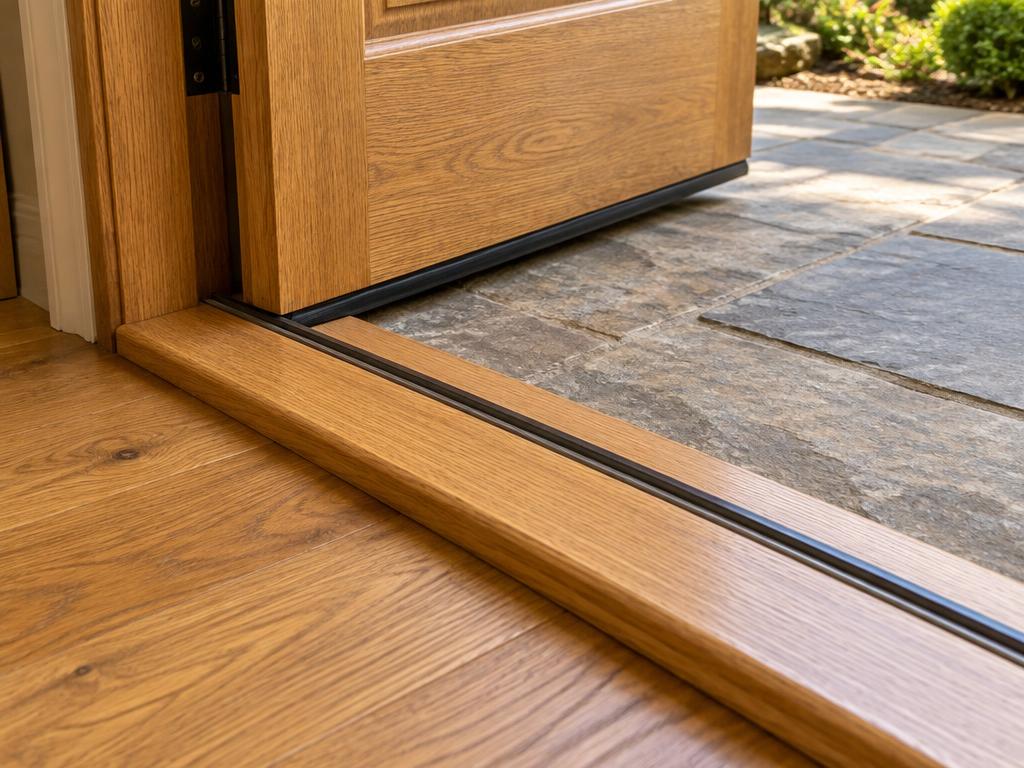
A threshold is a horizontal architectural element, typically made of wood, stone, or metal, that forms the bottom of a doorway and serves as the transition point between two spaces. Often referred to as a door sill or saddle, it functions both practically to seal gaps against drafts and moisture and symbolically to mark the boundary between different environments, such as the public and private realms. In modern design, thresholds are frequently engineered to be level or minimally raised to ensure accessibility and a seamless flow between interior and exterior spaces.
Structural & construction notes
Common types of thresholds include saddle thresholds for water resistance, half saddle thresholds for low profiles, transition strips for connecting different flooring, and latching thresholds for tighter seals. Other variations include skid-resistant, vinyl, aluminum, rubber, and stainless steel thresholds, as well as wide thresholds designed for ADA compliance. Common threshold materials include aluminum, wood, vinyl, stainless steel, brass, and bronze. Aluminum and stainless steel offer high durability and corrosion resistance at a moderate to high initial cost, making them ideal for high-traffic exterior use. Wood provides a classic aesthetic but requires regular maintenance to prevent rot and wear, while vinyl and rubber are affordable, well-insulating options that may have shorter lifespans under heavy friction or extreme weather.
Frequently Asked Questions
An educational reference. Project-specific design requires professional guidance.