
Expansion joint cover
Definition
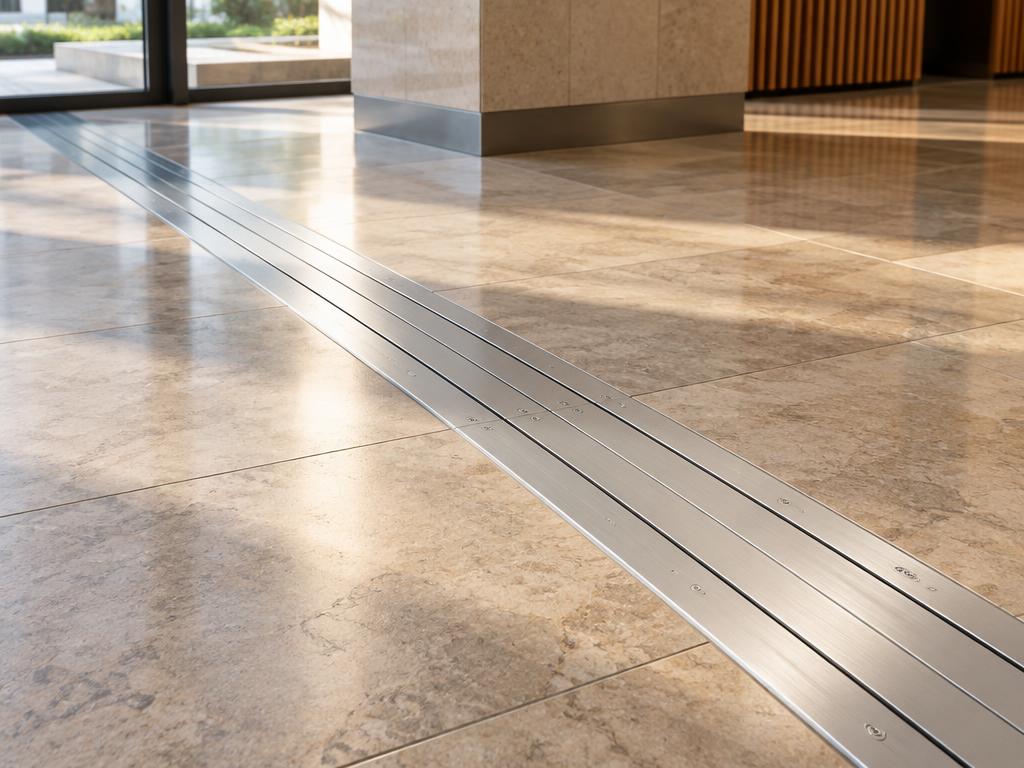
An expansion joint cover is a specialized architectural component designed to bridge the structural gaps, known as expansion joints, that run through a building's floors, walls, ceilings, or roof. These covers provide a safe, continuous, and often aesthetically integrated transition across the opening while accommodating multi-directional movement caused by thermal expansion and contraction, wind sway, building settlement, or seismic activity. Beyond maintaining a level surface for pedestrians and wheeled traffic, expansion joint covers can incorporate essential functional features such as waterproofing, fire-rated barriers, and acoustic insulation to maintain the integrity of the building envelope and its safety systems.
Structural & construction notes
Common types of expansion joint covers include metal systems made of aluminum or stainless steel for heavy traffic, elastomeric or rubber seals for flexibility and noise reduction, and PVC or vinyl options for cost-effective residential use. They are also categorized by application into floor, wall, ceiling, and roof covers, or by functional requirements such as fire-rated, waterproof, and seismic systems designed for extreme movement. Other variations include surface-mounted, flush-mounted, and architectural covers that integrate seamlessly into various flooring and wall finishes. Common materials for expansion joint covers include aluminum, stainless steel, and galvanized steel, which offer high durability and corrosion resistance for high-load or industrial environments. Architectural systems also utilize flexible materials like rubber (neoprene or EPDM), silicone, and fabric (PTFE or fiberglass) to accommodate significant movement and weathering. While high-performance materials like stainless steel and silicone have higher initial costs, they reduce long-term expenses by providing superior longevity and lower maintenance compared to more affordable options like fiber, foam, or bitumen.
Frequently Asked Questions
An educational reference. Project-specific design requires professional guidance.