
Water table
Definition
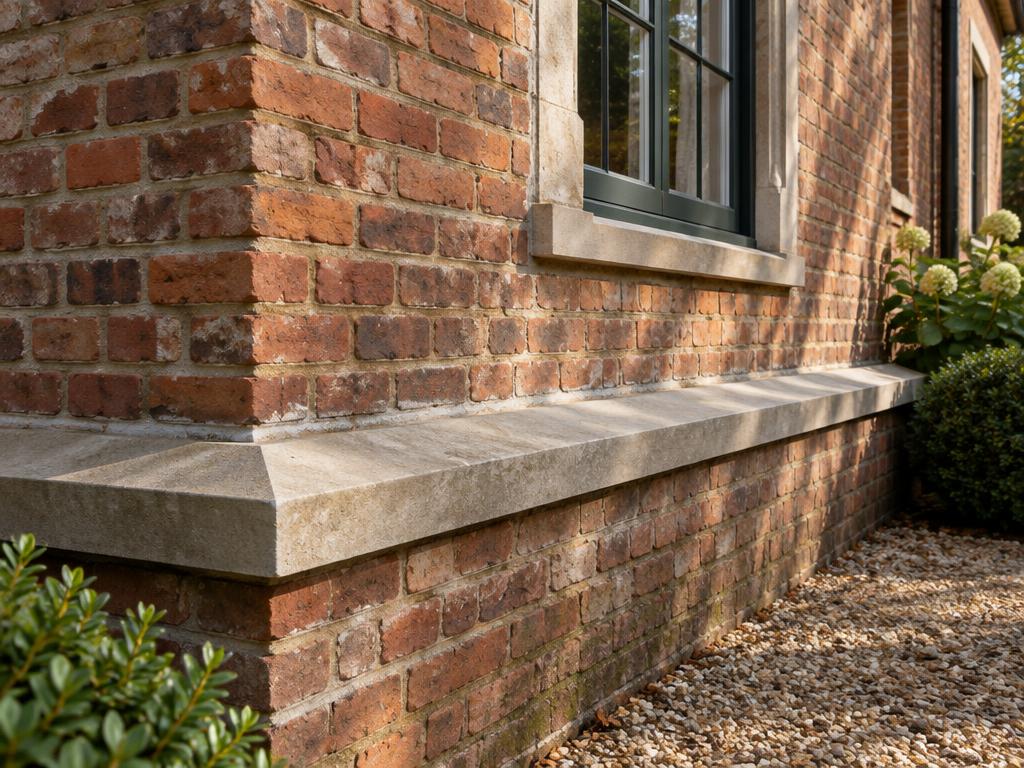
A water table is a horizontal architectural projection or offset near the base of an exterior wall, designed to direct rainwater away from the building's foundation. Frequently constructed of masonry, stone, or sloped wood, it serves the functional purpose of preventing moisture from seeping into the lower structure while also providing a visual transition between the foundation and the upper wall. This feature often marks a change in material or thickness, enhancing the building's aesthetic by defining its base with a distinct, protective ledge.
Structural & construction notes
Common types of water tables include masonry versions made of brick or natural stone like limestone and granite, as well as cast stone and wood varieties often capped with a drip edge. They can be designed with different profiles, such as beveled, chamfered, or curved shapes, and may serve as a simple horizontal projection or a more complex separator trim between different exterior finishes like stone and siding. Common materials for water tables include brick, natural stone such as limestone and granite, cast stone, and wood, which are often capped with a drip edge. High-durability materials like natural stone provide long-lasting performance and low maintenance but have higher initial costs, while wood and cast stone offer more affordable upfront investment but may require more frequent maintenance to prevent moisture damage and rot.
Frequently Asked Questions
An educational reference. Project-specific design requires professional guidance.