
Weather barrier
Definition
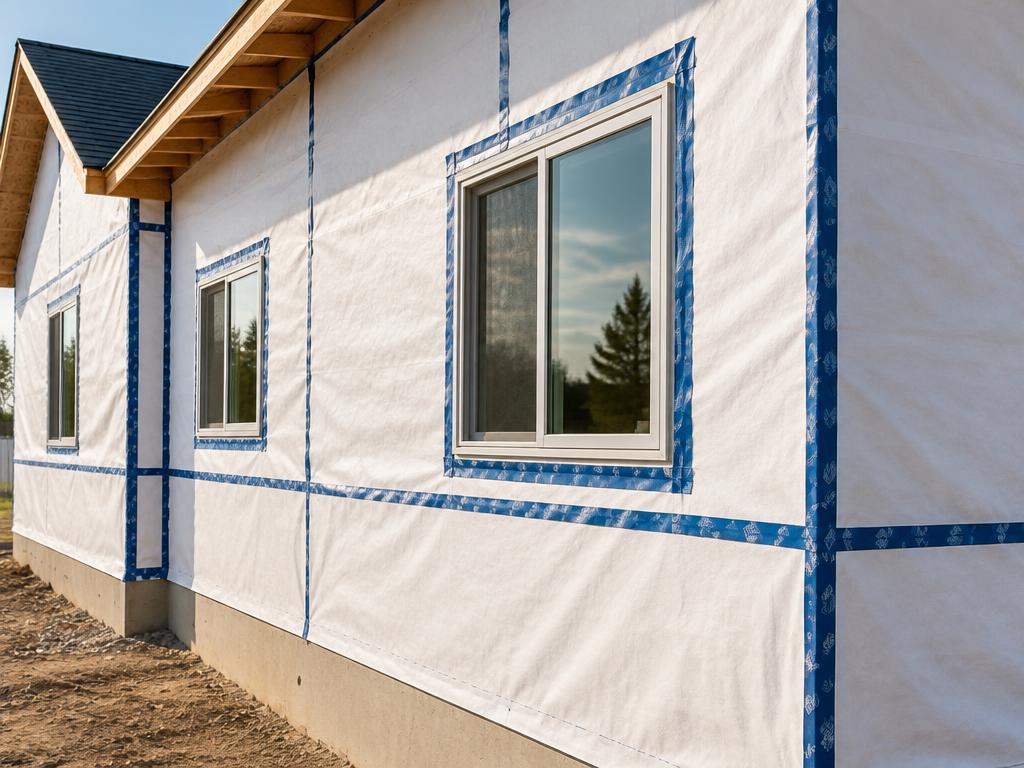
A weather barrier is a system of materials designed to prevent the infiltration of liquid water and wind into a building's structural components. Typically installed behind the exterior cladding, it serves as a secondary line of defense that protects the sheathing and framing from moisture damage, rot, and mold. By effectively managing water drainage and reducing air leakage, weather barriers enhance the overall durability and energy efficiency of the building envelope.
Structural & construction notes
Common types of weather barriers include mechanically fastened building wraps, self-adhered sheet membranes, fluid-applied membranes that are sprayed or rolled on, and integrated structural panels where the barrier is pre-attached to the sheathing. These systems can also be classified by their performance as either vapor-permeable or vapor-impermeable depending on the specific climate and wall assembly requirements. Common materials include asphalt-saturated felt, plastic house wraps (like Tyvek or HardieWrap), and fluid-applied or self-adhered membranes. Specialized house wraps cost between $0.50 and $1.00 per square foot, while high-performance fluid-applied systems offer greater durability at a higher price point. Investing in quality materials reduces long-term costs by preventing structural rot, mold remediation (averaging $1,200 to $3,750), and severe water damage repairs that can exceed $10,000.
Frequently Asked Questions
An educational reference. Project-specific design requires professional guidance.