
Verge
Definition
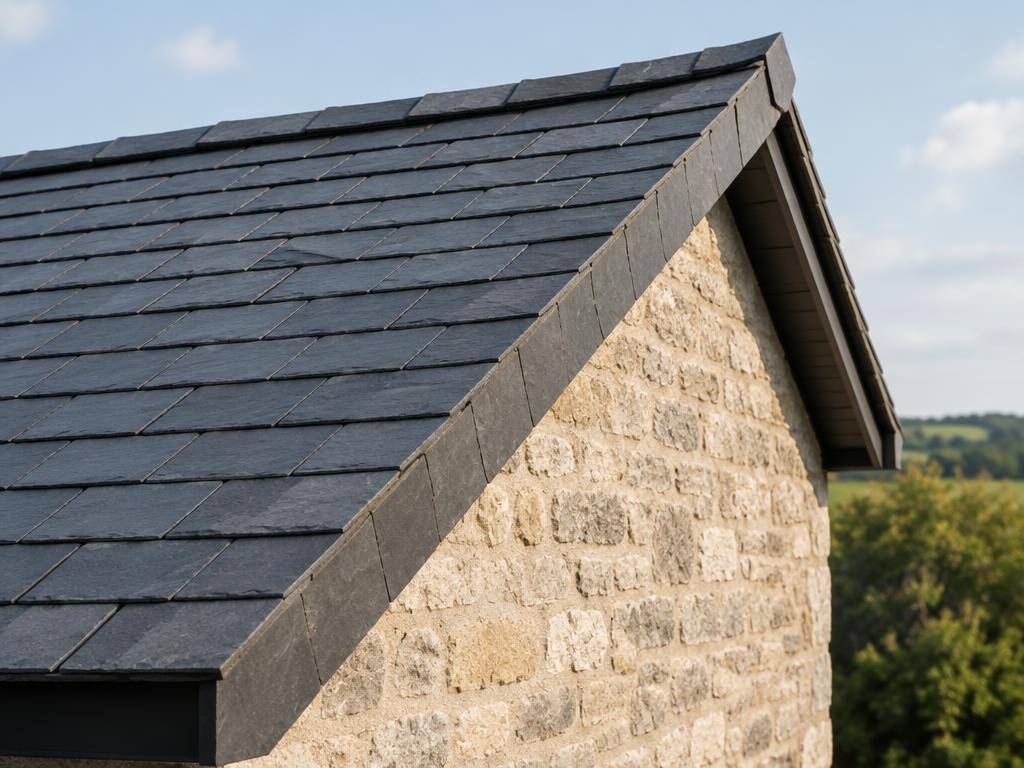
A verge is the edge or border of a pitched roof that projects over the gable or end wall of a building. It serves as the transition between the roof surface and the vertical face of the gable, providing a finished line that helps protect the junction from weather infiltration. Typically, the verge is treated with mortar, tiles, or metal flashing to ensure a watertight seal, though it can also be finished with a decorative or plain board known as a vergeboard.
Structural & construction notes
Common types of roof verges include traditional wet verges sealed with mortar and modern dry verge systems using interlocking plastic or aluminum caps. Specific variations within these categories include bedded verges, cloaked verges, gable ladders, outriggers, and omni-verge systems. Common materials for a verge include uPVC, aluminum, and traditional mortar. uPVC units are the most popular and cost-effective, offering durability and low maintenance for at least 10 to 30 years. Aluminum units are more expensive but provide superior strength and longevity. While traditional mortar is the cheapest upfront, it is the least durable and requires frequent, costly repointing due to cracking from weather and building movement. Mechanical dry verge systems have higher initial material costs than mortar but offer better long-term value by eliminating maintenance and preventing pest entry.
Frequently Asked Questions
An educational reference. Project-specific design requires professional guidance.