
Switchback stair
Definition
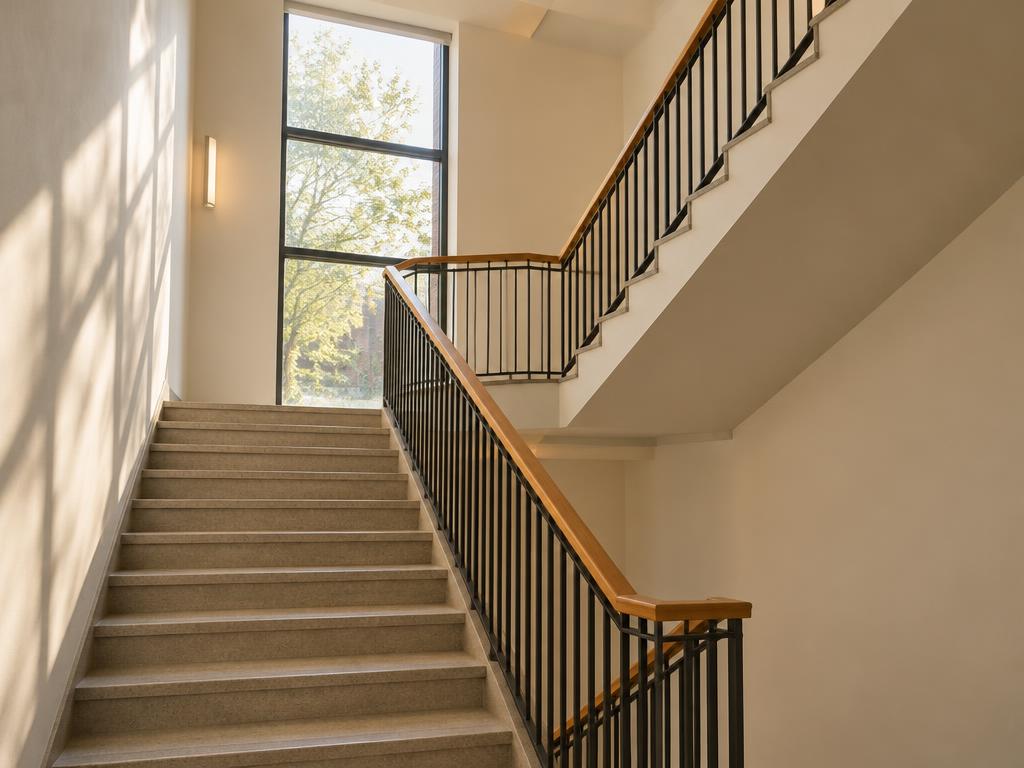
A switchback stair, also known as a U-shaped or half-turn staircase, is a space-efficient vertical circulation element consisting of two parallel flights of stairs that change direction by 180 degrees at an intermediate landing. This design allows the staircase to double back on itself, occupying less linear floor space than a straight-run stair while providing a natural resting point at the turn. Commonly utilized in both multi-story residential high-rises and commercial office buildings, switchback stairs offer high functionality for pedestrian traffic and can be customized with various materials like wood, metal, or glass to serve as a modern architectural focal point.
Structural & construction notes
Common types of switchback stairs include residential designs for homes, commercial configurations for high-traffic office buildings, and open-space models for lofts or areas with high ceilings. Variations also include double switchback stairs for multi-story buildings, industrial metal designs for utility, and floating switchback stairs that use modern stringers or glass railings for a contemporary aesthetic. Outdoor versions are often used for decks to manage steep elevation changes efficiently. Common materials for switchback stairs include wood (oak, maple, pine), steel, concrete, and composite, often paired with glass, cable, or wrought iron railings. Wood and composite are cost-effective, typically ranging from $100 to $250 per step, while high-durability materials like steel and concrete offer greater longevity but higher installation costs, often averaging $2,000 to $6,000 for a full flight. Precast concrete and steel provide excellent durability with mid-range costs, whereas custom glass or stone can significantly increase the investment to over $300 per step.
Frequently Asked Questions
An educational reference. Project-specific design requires professional guidance.