
Belt course
Definition
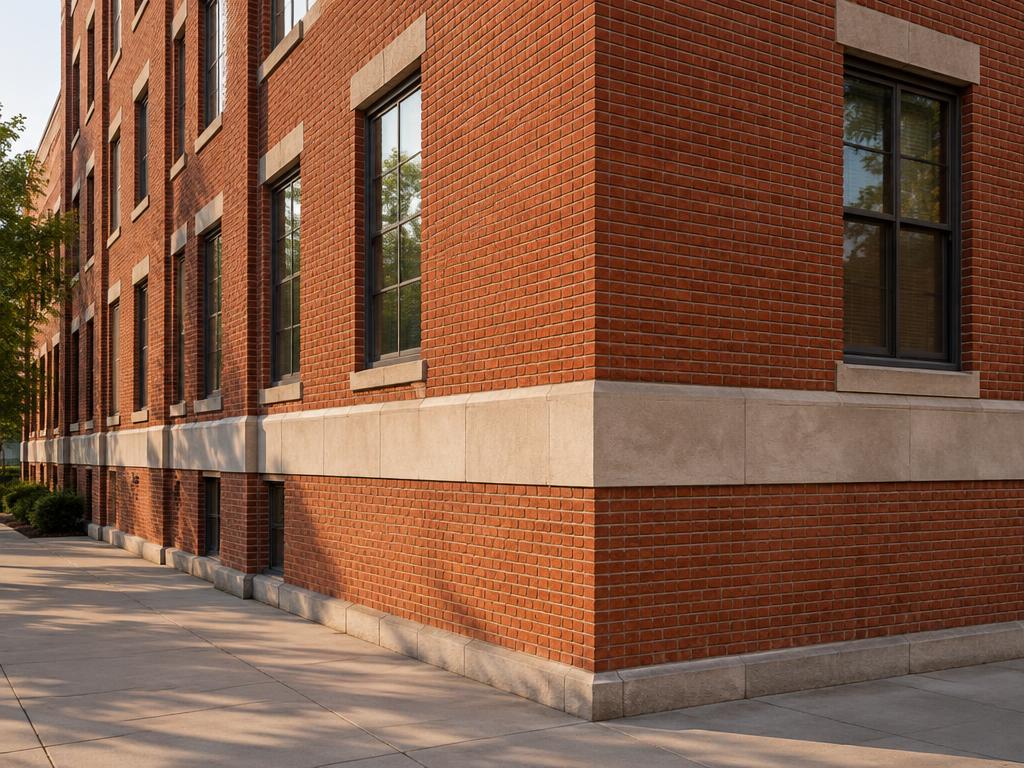
A belt course, also known as a string course, is a continuous horizontal band of masonry or other material that projects from or is set into the exterior wall of a building. Typically used to visually mark the division between different stories or to align with architectural features like window sills or headers, it serves to break up the vertical expanse of a facade and provide rhythmic definition to the structure's design. Beyond its decorative role in defining a building's scale and proportion, a belt course can also function as a water table to help shed rainwater away from the wall surface below.
Structural & construction notes
Common types of belt courses include stone, brick, wood, and concrete bands that can be plain, molded, or highly decorative. They are often categorized by their position or specific function, such as sill courses that align with window sills, floor-line courses that mark divisions between stories, and water tables designed to deflect rain from the foundation. Common materials for belt courses include stone, brick, concrete, and modern composite materials. High-durability materials like natural stone and brick have higher initial costs but offer exceptional longevity and low maintenance, while concrete and composites provide more affordable upfront options that may require more frequent inspection to ensure they continue to deflect water effectively and maintain the building's aesthetic.
Frequently Asked Questions
An educational reference. Project-specific design requires professional guidance.