
Picture rail
Definition
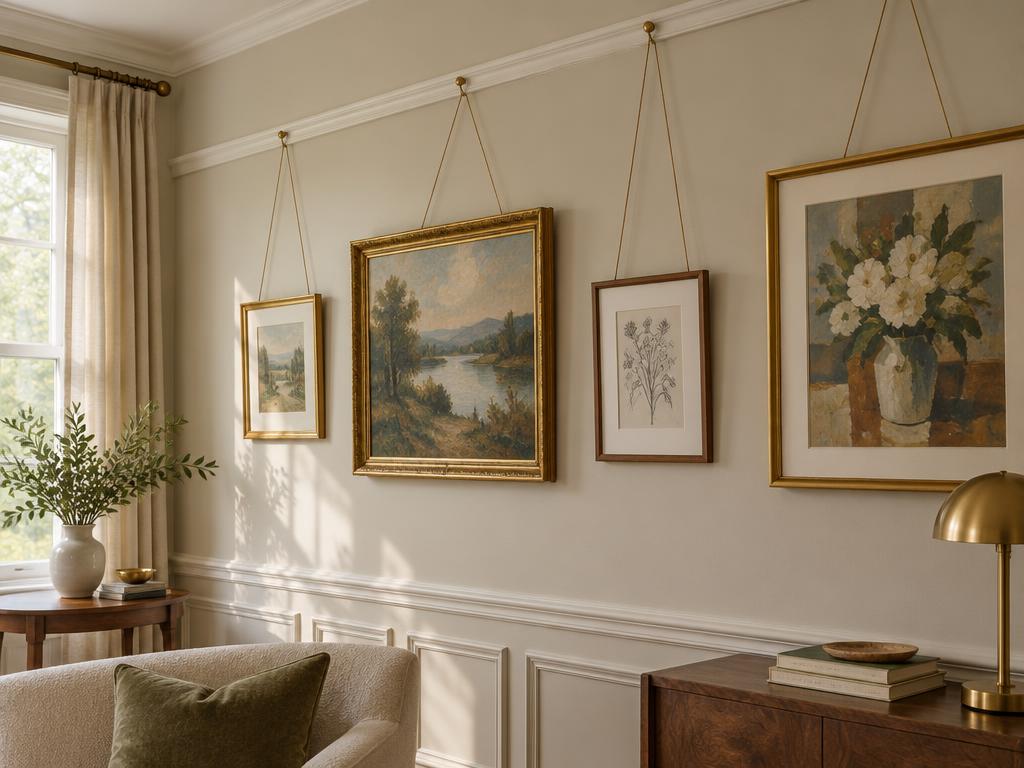
A picture rail is a horizontal interior molding or trim installed along the upper part of a wall, typically six to eighteen inches below the ceiling, designed to facilitate the hanging of artwork without damaging the wall surface. Originating in the 15th century and popularized during the Georgian, Victorian, and Edwardian eras, it features a contoured profile or "lip" that supports specialized hooks and cords, allowing for the flexible lateral and vertical positioning of frames. Beyond its practical function of protecting plaster from nail holes, the picture rail serves as a decorative element that adds architectural character, defines room proportions, and can act as a visual border for contrasting paint or wallpaper. Traditionally crafted from wood or plaster, modern versions are also available in materials like metal and MDF to suit a variety of contemporary and period interior styles.
Structural & construction notes
Common types of picture rail include traditional wooden mouldings such as Victorian, Edwardian, and Colonial styles characterized by specific profiles like Ogee or Craftsman. Modern variations feature sleek aluminum or steel tracks that can be wall or ceiling-mounted, including heavy-duty systems for galleries and inconspicuous slim-line designs. Other contemporary options include adjustable metal rods, such as brass or copper gallery rods, and even repurposed curtain rods used for a similar hanging effect. Common materials include timber, MDF, metal (aluminum and brass), and PVC. High-quality materials like solid timber and brass offer classic aesthetics and long-term durability at a higher initial cost. Affordable options like PVC and MDF reduce upfront investment, with PVC providing excellent moisture resistance and low maintenance, while composite materials offer a balance of cost, durability, and ease of installation.
Frequently Asked Questions
An educational reference. Project-specific design requires professional guidance.