
Control joint groove
Definition
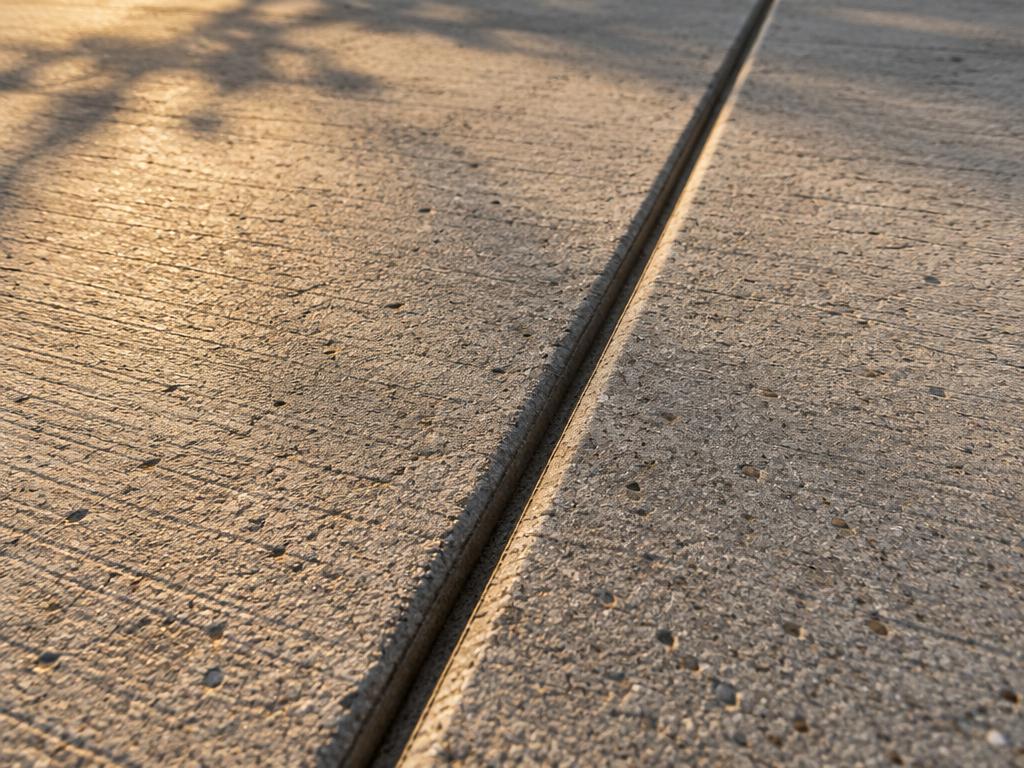
A control joint groove is a planned linear indentation or channel formed, tooled, or sawn into the surface of concrete or masonry to regulate where cracking occurs. By creating an intentional plane of weakness, it ensures that inevitable cracks caused by shrinkage, curing, or thermal movement happen along a neat, straight line rather than appearing as random, jagged fissures across the structure. This architectural detail is essential for maintaining the aesthetic appearance and structural durability of sidewalks, floors, and walls by managing internal stresses and preventing moisture infiltration through uncontrolled cracks.
Structural & construction notes
Common types of control joint grooves include saw-cut joints created with diamond blades after the concrete hardens and tooled or grooved joints formed with hand tools while the concrete is still wet. Other variations include preformed plastic or hard board joint strips inserted before finishing and specialized decorative joints used in stamped patterns. Common materials for control joint grooves include bronze or stainless steel grooving tools used during the pouring process, while the resulting joints are often finished with sealants like silicone, polyurethane, or grey caulk. High-quality silicone offers the best durability and longest lifespan (15-20 years) but has higher material costs, whereas more affordable options like acrylic latex or rubberized asphalt require more frequent reapplication and offer less protection against water infiltration.
Frequently Asked Questions
An educational reference. Project-specific design requires professional guidance.