
Dentil
Definition
A dentil is a small, rectangular block used as a repeating ornament in a series, typically found within the bedmould of a cornice or along a roofline. Derived from the Latin word dens, meaning tooth, these closely spaced decorative elements resemble a row of teeth and are a hallmark of classical Greek and Roman architecture. Dentils serve to add visual rhythm, depth, and a sense of formal elegance to both exterior facades and interior trim, often appearing in Neoclassical, Federal, and Colonial Revival styles to convey a timeless, refined character.
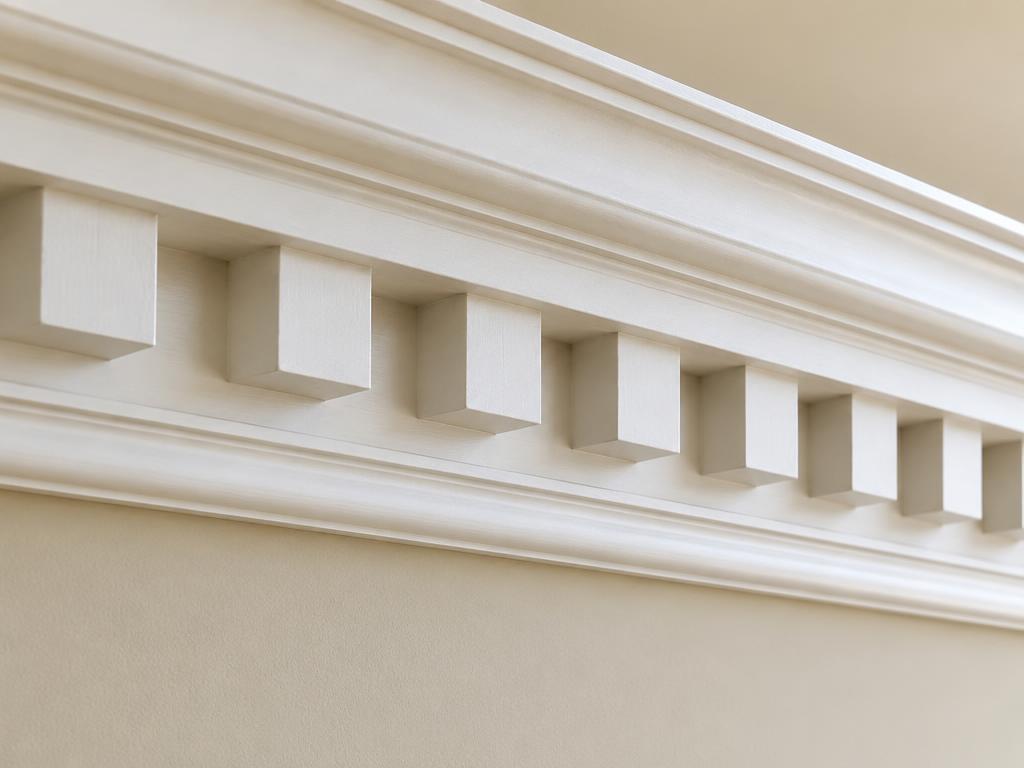
Structural & construction notes
Common types of dentils include the standard rectangular or square block, the Venetian dentil which features equal width for both the block and the interval, and the Byzantine dentil which is splayed back and often used decoratively around arches. Other variations include the continuous dentil-band where individual blocks are not fully cut, and modern versions made from materials like polyurethane, wood inserts, or high-density polystyrene. Common materials include polyurethane, wood, PVC, stone, and plaster. Durable synthetics like polyurethane and PVC are moisture and rot-resistant, offering lower long-term maintenance costs than traditional wood. While high-quality wood and natural stone provide classic aesthetics, they typically involve higher material and installation costs, whereas cellular vinyl and urethane provide a cost-effective balance of longevity and ease of installation.
Frequently Asked Questions
An educational reference. Project-specific design requires professional guidance.