
Chimney crown
Definition
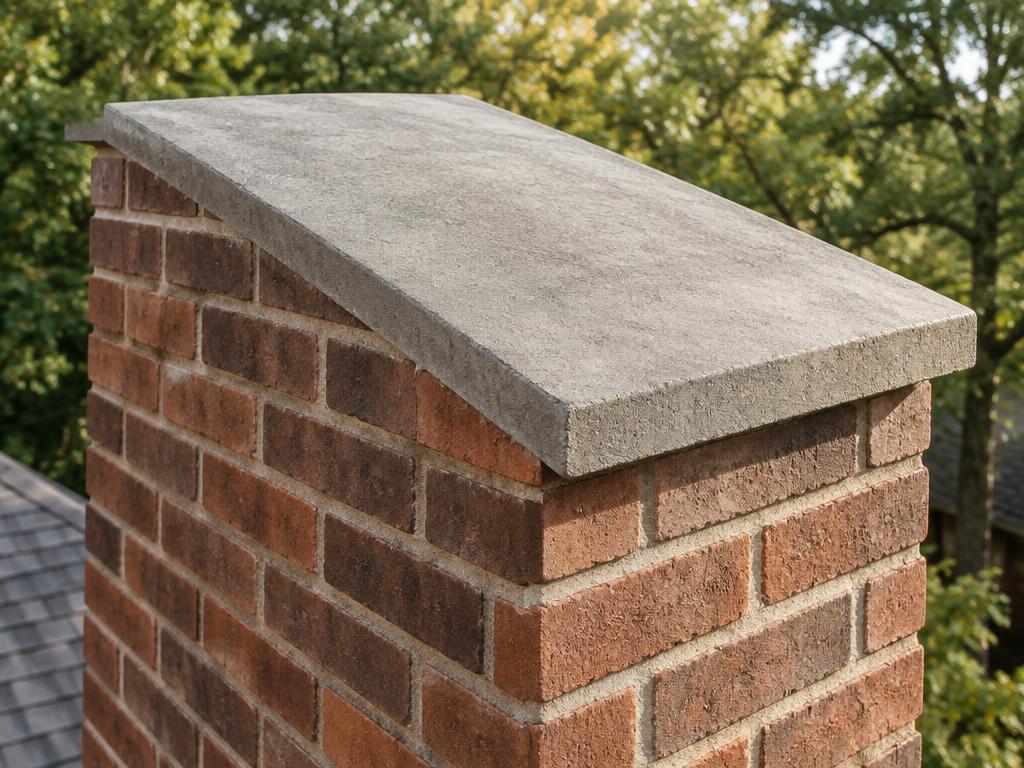
A chimney crown is a protective masonry or concrete slab that covers and seals the top of a chimney structure, surrounding the flue opening. Its primary function is to serve as a waterproof shield, directing rain, snow, and ice away from the internal chimney masonry and onto the roof below. Properly constructed crowns feature a sloped design and an overhang, often called a kerf, which prevents moisture from pooling or running down the vertical face of the bricks, thereby safeguarding the structure from water damage, cracking, and premature deterioration.
Structural & construction notes
Common types of chimney crowns include cast-in-place concrete crowns, which are durable and custom-molded on-site, and precast concrete crowns manufactured in factories for consistent quality. Other varieties include metal crowns made of stainless steel or copper that offer high corrosion resistance, and natural stone crowns used for a classic aesthetic in traditional or historic homes. Domestic applications may also feature cast stone or masonry crowns depending on the structural and architectural requirements. Common materials for chimney crowns include concrete, which offers high durability and a lifespan of 25 to 50 years at a moderate to high cost, and mortar or cement mixes, which are more affordable but less resilient and prone to earlier failure. Metal crowns, such as stainless steel or copper, provide excellent weather resistance and longevity but involve higher upfront investment, while waterproof sealants are often applied to enhance the durability of masonry options.
Frequently Asked Questions
An educational reference. Project-specific design requires professional guidance.