
Bow window
Definition
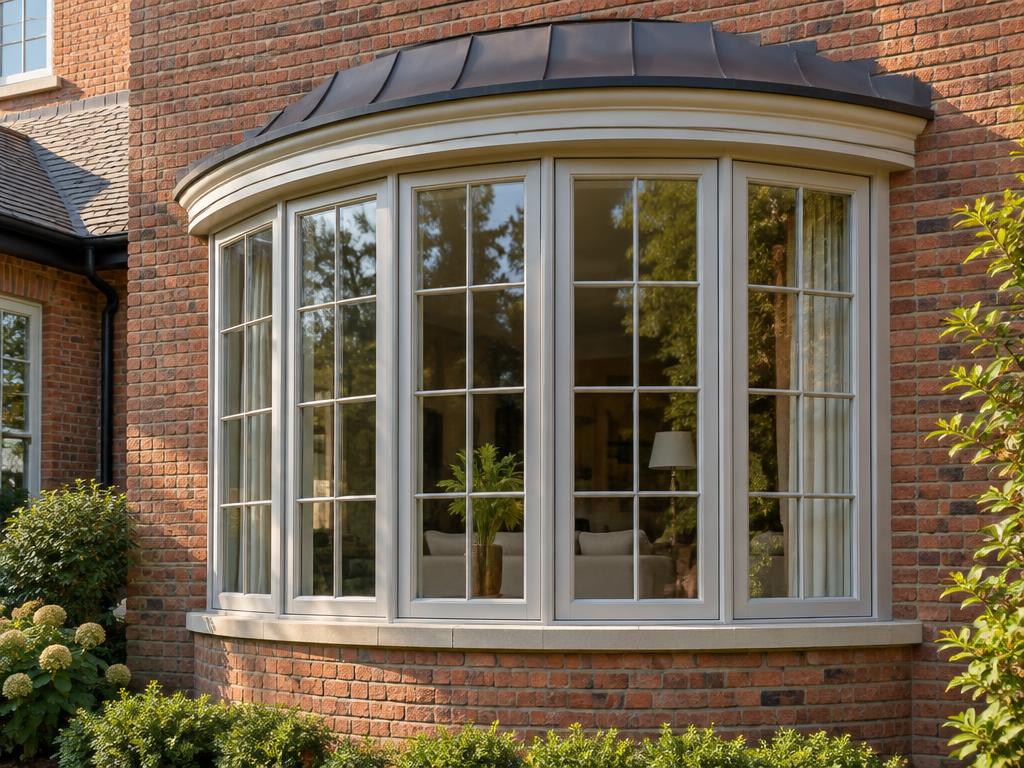
A bow window is a curved architectural feature that projects outward from the exterior wall of a building, creating a rounded alcove or "bump-out" on the interior. Distinguished from the more angular three-sided bay window, it typically consists of four or more window panels of equal size arranged in a gentle, semicircular arc. This design provides sweeping, panoramic views and allows natural light to enter from multiple angles, often making a room feel more spacious and inviting. Frequently associated with Victorian and Federal styles, bow windows add a soft, elegant aesthetic to a facade and are commonly used in living areas, dining rooms, or bedrooms to create a focal point or a cozy seating nook.
Structural & construction notes
Common types of bow windows are typically classified by the number of window panels used, such as four-lite, five-lite, or six-lite configurations. They are also categorized by the type of individual window units integrated into the curve, including fixed picture windows for unobstructed views or operable casement and double-hung windows for ventilation. Specialized variations include compass windows, which feature a deep semi-circular projection, and oriel-style bow windows that are supported by brackets or corbels on upper stories rather than extending to the ground. Common materials include vinyl, wood, fiberglass, aluminum, and composites. Vinyl is the most affordable and low-maintenance but can warp in extreme heat, while wood offers high durability and insulation at a higher cost. Fiberglass and composites provide superior longevity and stability for a mid-to-high price range, whereas aluminum is lightweight and durable but offers poor insulation, making it best for mild climates.
Frequently Asked Questions
An educational reference. Project-specific design requires professional guidance.