
Corbel
Definition
A corbel is a structural or decorative architectural member that projects from a wall to support a weight above it, such as a cornice, balcony, beam, or arch. Traditionally crafted from stone, wood, or metal, this bracket-like element functions by being deeply embedded into the masonry to counteract the pressure of the load it carries. Beyond their functional role in distributing weight and providing stability, corbels are often ornately carved with motifs ranging from classical scrolls to grotesque figures, serving as a prominent aesthetic feature in styles such as Gothic, Renaissance, and Victorian architecture.
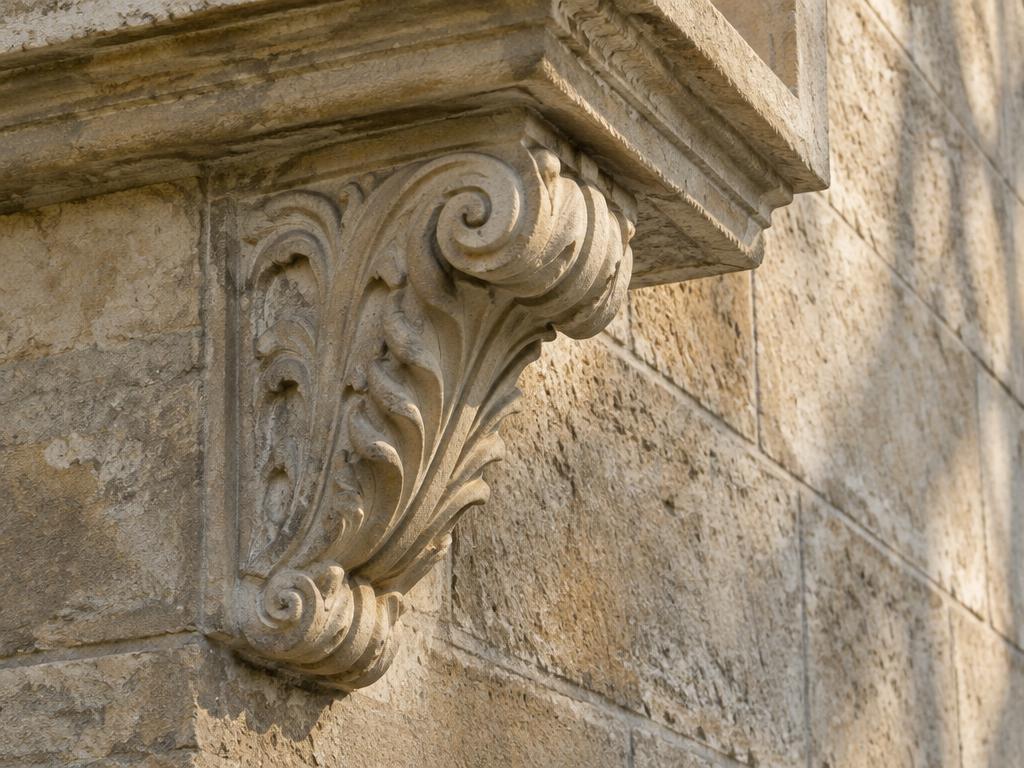
Structural & construction notes
Common types of corbels include decorative and structural varieties made from wood, stone, metal, or plaster. They are often categorized by architectural styles such as classical, Gothic, mission, and Renaissance, or by specific motifs like acanthus leaf, scroll, and grape designs. Functional variations also include s-shaped consoles, brackets for supporting countertops and mantels, and corbelled arches or vaults. Common materials include wood, stone, metal, and synthetics like polyurethane or PVC. Masonry and metal corbels offer the highest durability and structural support but involve higher material and installation costs. Wood provides a versatile option with costs varying by species, while lightweight synthetics are the most affordable and maintenance-free choices for decorative applications.
Frequently Asked Questions
An educational reference. Project-specific design requires professional guidance.