
Bracket
Definition
A bracket is a structural or decorative architectural element that projects from a wall or vertical surface to support the weight of an overhanging feature, such as a cornice, balcony, eave, or shelf. Typically L-shaped or angled, brackets transfer vertical loads back to the main structure and can be made from various materials, including wood, stone, metal, or plaster. While many brackets serve a critical load-bearing function, they are also frequently used as ornamental features, often featuring elaborate carvings, scrolls, or volutes that enhance the building's aesthetic character.
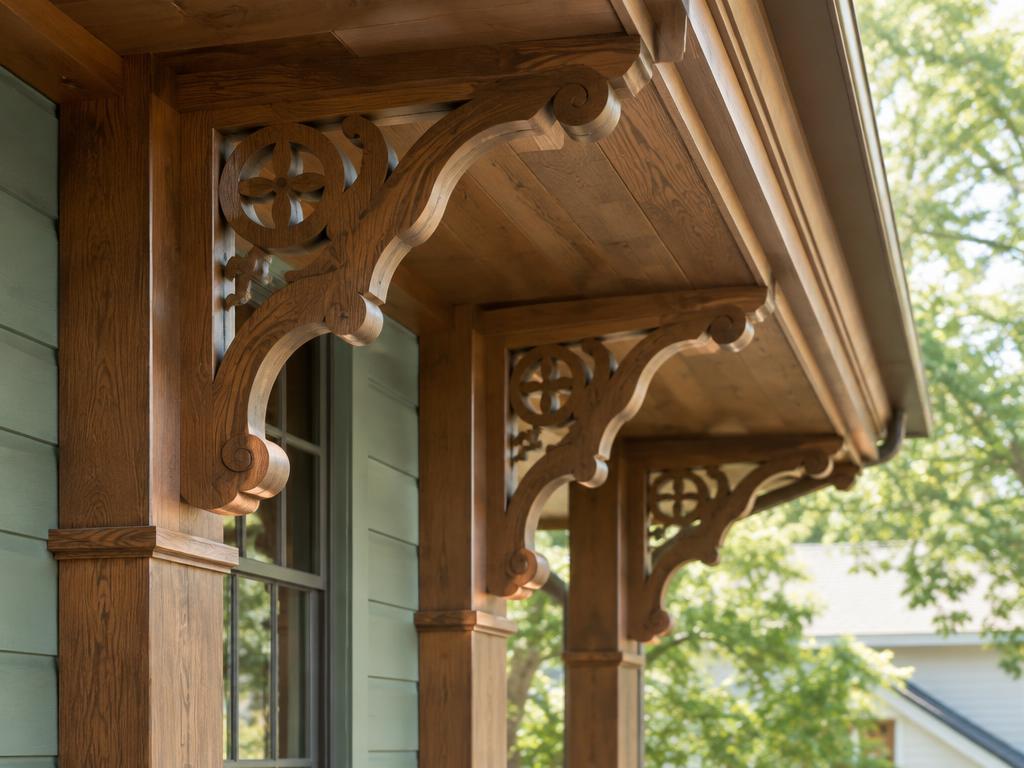
Structural & construction notes
Common types of brackets include support brackets for architectural elements like balconies, corbels for masonry and structural weight-bearing, and highly decorative console brackets often used for interior shelving and mantels. Other specialized variations include gable brackets for roof peaks, rafter tails for eaves, and specific types like lintel, dentil, and knee braces used for reinforcement or aesthetic enhancement. Common materials for brackets include wood (cedar, pine, maple), PVC, urethane, high-density foam, and metal (stainless steel, aluminum). Natural wood offers a traditional aesthetic but requires regular maintenance and is susceptible to rot and pests, leading to higher long-term costs. In contrast, modern synthetic materials like PVC and polyurethane are lightweight, moisture-proof, and insect-resistant, providing greater durability and lower maintenance costs while often being more affordable to install. Metal brackets offer superior strength and corrosion resistance but can vary significantly in price depending on the specific alloy used.
Frequently Asked Questions
An educational reference. Project-specific design requires professional guidance.