
Weep hole
Definition
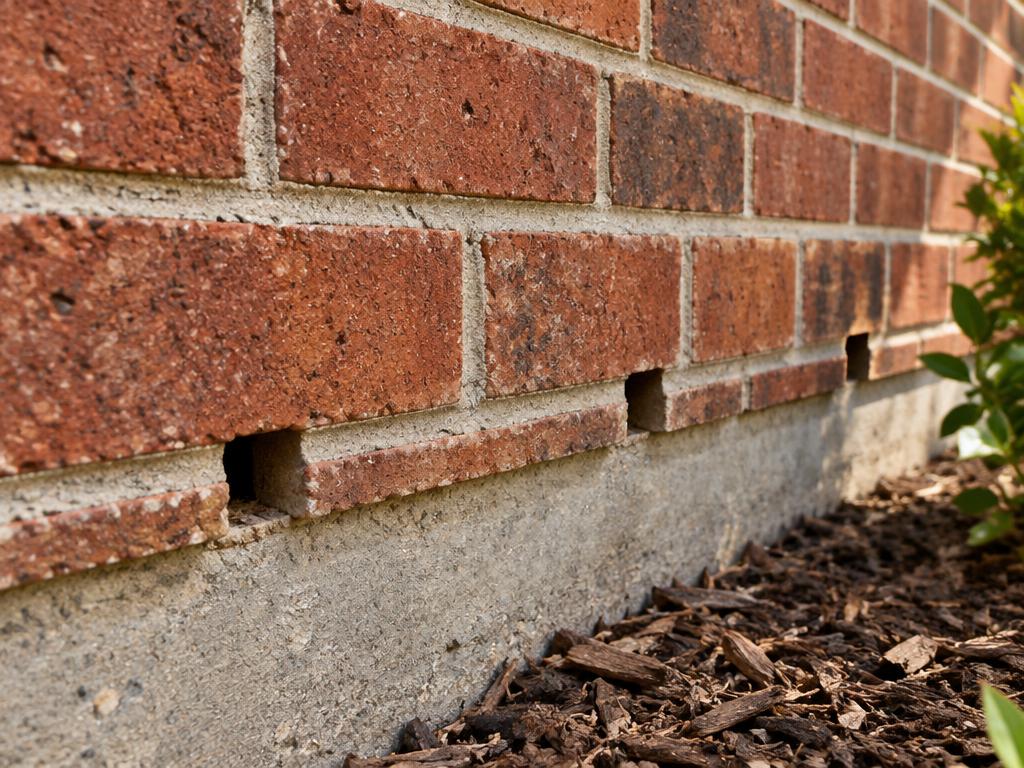
A weep hole is a small, intentional opening integrated into various architectural assemblies—most commonly masonry veneer walls, retaining walls, and window frames—to facilitate the drainage of accumulated water and provide essential ventilation. By allowing moisture that has penetrated the exterior skin or formed through condensation to escape the internal cavity, weep holes prevent structural damage such as dry rot, mold growth, and corrosion of wall ties. In retaining walls, they serve a critical structural role by relieving hydrostatic pressure from the soil, while in window systems, they prevent water from pooling on the sill. Often appearing as unfilled vertical mortar joints or small tubes, these apertures are vital for maintaining the long-term integrity and performance of a building's envelope.
Structural & construction notes
Common types of weep holes include open head joints formed by leaving mortar out of vertical joints, cotton rope wicks that use capillary action to draw moisture out, and plastic or metal tubes installed at an angle. Other modern varieties include corrugated channels that create drainage tunnels, louvered or baffled vents to prevent pest entry, and cellular honeycomb vents that allow for both drainage and ventilation. Common materials for weep holes include plastic (PVC or polyethylene), stainless steel, brass, and open-weave polyester mesh. Plastic and mesh options are cost-effective and corrosion-proof, though plastic may require UV stabilizers to prevent sun damage. Stainless steel and brass offer superior durability and pest resistance but typically involve higher material costs.
Frequently Asked Questions
An educational reference. Project-specific design requires professional guidance.