
Pilaster capital
Definition
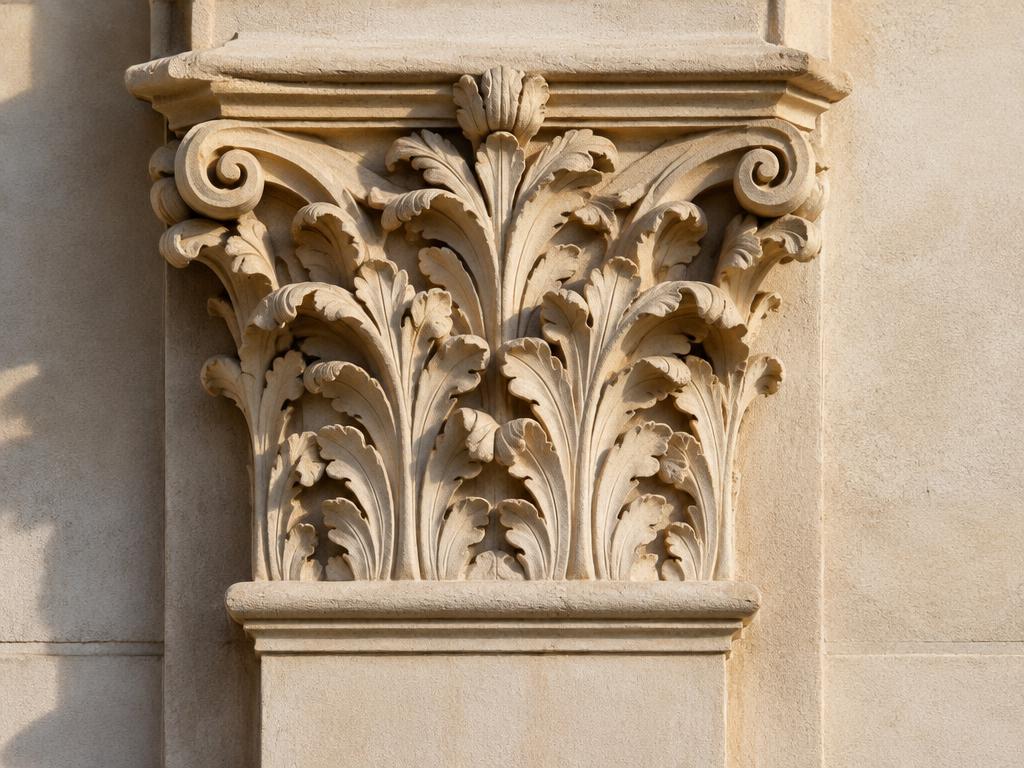
A pilaster capital is the ornamental top section of a pilaster that serves as a decorative transition between the vertical shaft and the horizontal elements above, such as an entablature or arch. It is typically designed according to classical orders like Doric, Ionic, or Corinthian to enhance the building's aesthetic character and provide visual completion to the pilaster's form.
Structural & construction notes
Common types of pilaster capitals include the classical Greek and Roman orders such as Doric, Ionic, Corinthian, Tuscan, and Composite. Other varieties feature historical and decorative styles like Renaissance, Baroque, Romanesque, Gothic, Egyptian, Art Nouveau, and Art Deco, alongside specialty designs like the Temple of the Winds or those featuring floral, acanthus, and shell motifs. Common materials for pilaster capitals include polyurethane, wood, stone, plaster, and metals like aluminum. High-durability materials like natural stone and fiberglass offer maximum longevity and weather resistance but involve higher initial costs. Affordable synthetic options like polyurethane and polystyrene reduce upfront investment and are lightweight for easy installation, providing the look of authentic wood or concrete with lower maintenance requirements and a longer lifespan in exterior applications.
Frequently Asked Questions
An educational reference. Project-specific design requires professional guidance.